
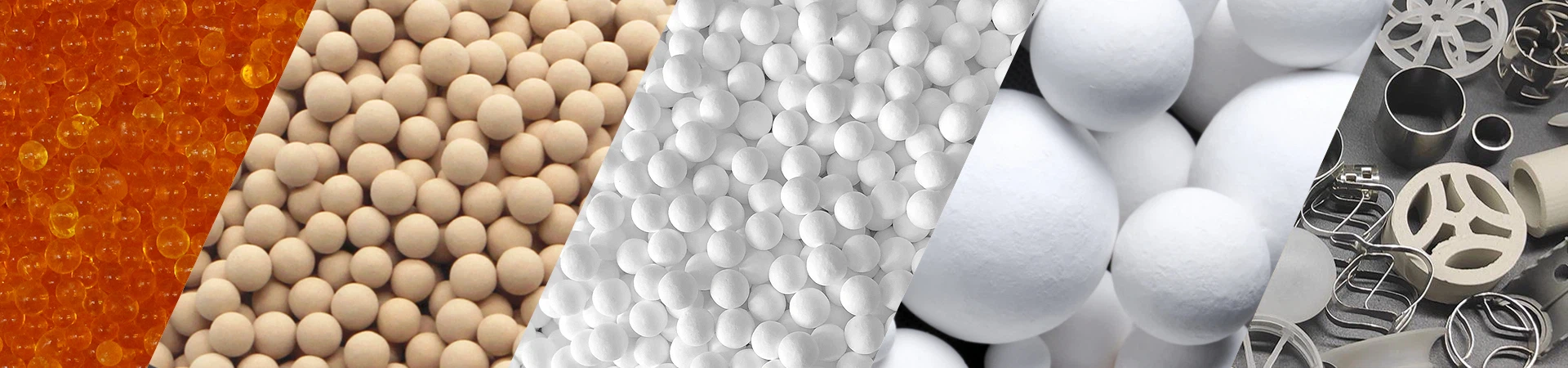
Activated alumina is also known as modern purified water activated alumina, English name is activated alumina or Reactive alumina; activated alumin (I) um oxide. The use of alumina (AL2O3) in the catalyst, commonly referred to as activated alumina, is a porous, highly dispersible solid material with a large surface area and a microporous surface with the properties required for catalysis. Such as adsorption performance, fluorine removal performance, drying performance, surface activity, excellent thermal stability, etc., it is widely used as a catalyst for household desiccant and chemical reaction and catalyst carrier.
The main industrial applications of activated alumina as adsorbent include gas drying, liquid drying, water purification, selective adsorption in petroleum industry and chromatographic separation process.
Activated alumina is widely used in gas drying because of its strong affinity to water. The main gases that can be dried with activated alumina are: acetylene, pyrolysis gas, coke oven gas, hydrogen, oxygen, air, ethane, hydrogen chloride, propane, ammonia, ethylene, hydrogen sulfide, propylene, argon, methane, sulfur dioxide, carbon dioxide, natural gas, helium, nitrogen, chlorine and so on. Since activated alumina releases a large amount of heat when it absorbs water, it is necessary to design the drying capacity, drying rate, heat exchange and regeneration mode.
activated alumina can be dried liquids: aromatic hydrocarbons, high molecular alkenes, gasoline, kerosene, cyclohexane, propylene, butene and many halogenated hydrocarbons. When these liquids are in contact with alumina, the two will not react or polymerize. Meanwhile, the dry liquid does not contain components that are easy to adsorb on the surface of alumina and difficult to remove during regeneration.
In terms of water purification, activated alumina is mainly used to remove fluoride in drinking water, and it is also effective in eliminating the color and odor of industrial sewage. In addition, activated alumina is widely used in the recovery of carbohydrates, selective adsorption and the curing of power system oil.
