
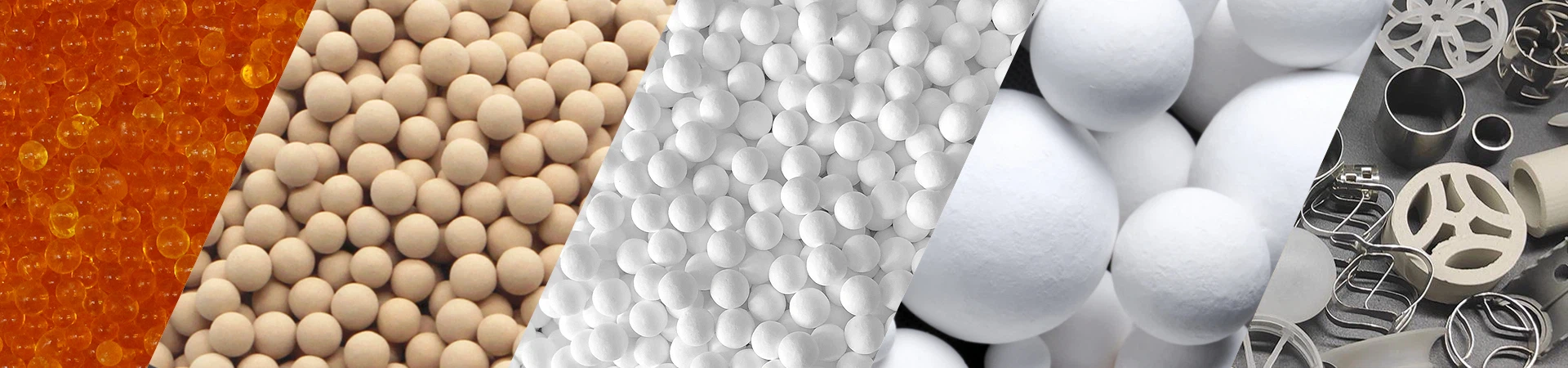
In the field of chemical engineering, metal pall rings, as a highly efficient and multifunctional packing material, are widely used in various tower reactors, such as absorption towers, distillation towers, and washing towers. Their unique structural design and excellent performance characteristics have significantly impacted the optimization and efficiency improvement of chemical processes. This article will delve into the role of metal Pall rings, elaborating on their structural characteristics, mass transfer efficiency, fluid dynamics performance, corrosion resistance, and economic benefits.
I. Structural Characteristics of Metal Pall Rings
Metal Pall rings, as the name suggests, are ring-shaped packing materials made of metal (such as stainless steel and carbon steel). Their shape is a ring with inwardly bent sides, and the ring walls have perforations. These designs are not arbitrary but based on precise calculations and experimental optimization. This special structure not only increases the specific surface area of the packing, significantly increasing the contact area between the gas and liquid phases, but also promotes turbulence and mixing between the gas and liquid, effectively improving mass transfer efficiency. Simultaneously, the presence of perforations reduces the pressure drop of the packing layer, making the fluid flow within the tower smoother and reducing energy consumption.
II. Enhancing Mass Transfer Efficiency
In chemical processes, mass transfer efficiency is a key factor determining reaction rate and product quality. Metal Pall rings, through their unique structure, significantly enhance the contact opportunities and time between the gas and liquid phases. When gas and liquid flow through the packing layer, due to the window effect of the Pall rings, gas forms vortices within the rings, while liquid flows in a thin film along the ring walls. This complex flow pattern promotes thorough mixing and mass exchange between gas and liquid, thus significantly improving mass transfer efficiency. Furthermore, the excellent thermal conductivity of the metal material ensures temperature uniformity during the reaction process, further enhancing the mass transfer effect.
III. Optimizing Fluid Dynamics Performance
Fluid dynamics performance is one of the important indicators for evaluating packing performance. The design of metal Pall rings fully considers the flow characteristics of fluids within the tower. Through reasonable layout and structural optimization, uniform distribution and efficient flow of fluids within the packing layer are achieved. Its window design reduces fluid flow resistance and lowers the pressure drop within the tower, enabling the tower equipment to operate with lower energy consumption. Meanwhile, metal Pall rings also possess excellent anti-clogging properties, maintaining good flow even when handling liquids containing solid particles or high viscosity, reducing maintenance costs and downtime.
IV. Superior Corrosion Resistance
Chemical processes often involve various corrosive media, posing a significant challenge to the material selection of packing. Metal Pall rings, made of corrosion-resistant materials such as stainless steel and carbon steel, can operate stably for extended periods under harsh conditions, resisting corrosion, wear, or deformation. This not only extends the service life of the packing but also ensures the continuity and stability of the chemical process. Furthermore, some specially designed metal Pall rings can be coated with a corrosion-resistant coating to further enhance their corrosion resistance and meet even more demanding operating conditions.
V. Significant Economic Benefits
The application of metal Pall rings not only improves the efficiency and stability of chemical processes but also brings significant economic benefits. Firstly, due to their high mass transfer and fluid dynamics performance, tower equipment can achieve the same processing effect with lower energy consumption, thereby reducing operating costs. Secondly, the corrosion resistance and long service life of metal Pall rings reduce the frequency of equipment maintenance and replacement, further lowering maintenance costs. Furthermore, the widespread application of metal Pall rings has promoted technological progress and industrial upgrading in the chemical industry, bringing more market opportunities and competitive advantages to enterprises.
In conclusion, as an important packing material in the chemical field, metal Pall rings play an irreplaceable role in numerous chemical processes due to their unique structural characteristics, high mass transfer efficiency, optimized hydrodynamic performance, excellent corrosion resistance, and significant economic benefits. With the continuous development and technological innovation of the chemical industry, the application prospects of metal Pall rings will be even broader, contributing more to the sustainable development of the chemical industry.
