
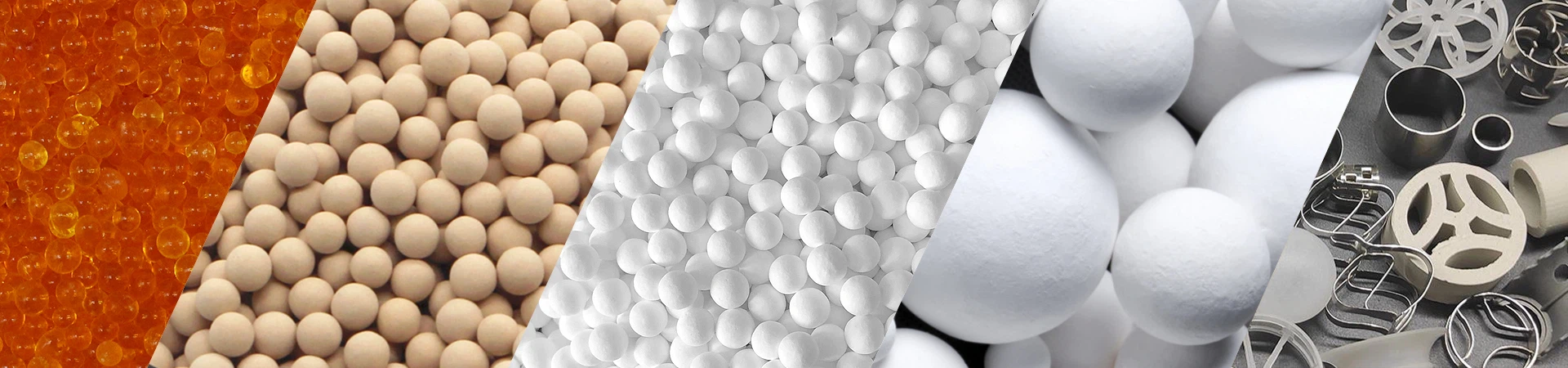
The air separation equipment includes the air cooling tower, water cooling tower, molecular sieve adsorber, main heat exchanger, liquid-air-liquid nitrogen subcooler, condensing evaporator, upper and lower tower, crude argon tower, and fine argon tower.
About molecular sieve adsorber:
Function: Adsorbing water, CO2, acetylene and other hydrocarbons in the air, making the air clean
Structure: horizontal cylindrical body, built-in support grid frame, supporting molecular sieve adsorbent
Using: When the air passes through the molecular sieve bed, it adsorbs water, CO2, acetylene and other hydrocarbons, and the purified air CO2 content is <1ppm; in the regeneration cycle, it is first regenerated by the high-temperature drying gas and then dried at room temperature. The gas is cooled to normal temperature, and the two molecular sieves are used alternately in a team.
About molecular sieves:
Molecular sieves have the characteristics of strong adsorption of polar molecules with similar pore sizes. Water, carbon dioxide and acetylene can basically be removed in molecular sieve adsorbers. Most other hydrocarbons such as methane and ethane enter the air separation tower with air. These substances Most are dissolved in the liquid, and a small amount is carried away by the evaporation of oxygen.
Common reasons for high CO2 content in air separation towers are: molecular sieves are smashed due to long-term sinking or airflow shock, gaps appear on the adsorbent bed of molecular sieve adsorber, and airflow is short-circuited; molecular sieve has strong adsorption capacity for specific gases, but it has An optimal temperature working area, where the inlet air temperature exceeds this working area, will cause the molecular sieve to adsorb C02.
The cylinder oil or light ends of the air compressor are brought into the molecular sieve purifier along with the air flow, which will cause molecular sieve poisoning, decrease the adsorption capacity, and incomplete adsorption of carbon dioxide. Not only block the plate-fin heat exchanger and affect the operating cycle, but also increase the carbon dioxide in the liquid oxygen, gradually precipitate into ice-like solids and rub against the inner wall of the condensation evaporator to generate static electricity.
Welcome your questions or ideas, hope to help you with your projects.