
5A Molecular Sieve Adsorbent For Adsorbing Carbon Dioxide

The Importance of CO2 Removal from Steam-cracked Gas
CO2 is a component that is commonly found in steam-cracked gas as it is produced during the process of steam cracking that takes place in the petrochemical industry. Though not exactly harmful there are negative effects of the presence of CO2 based on its physical properties. Being acidic when it is dissolved in the water it forms carbonic acid. Due to this, when moisture or water is present the carbonic acid formed could lead to the corrosion of pipelines and equipment. Such corrosion leads to the weakening of infrastructure that causes failures, leaks, and inevitably replacement or costly maintenance.
Apart from corrosion, another problem area is the fouling of heat exchangers and other process equipment. The reaction of CO2 with other gas stream components leads to the formation of solid deposits and scale. These can adhere to the surface of the equipment. The heat transfer efficiency thus, is hampered which in turn leads to drops in pressure. Such equipment would need eventual replacement despite the increased frequency of cleaning. CO2 removal is also required because of the negative effects it has on the quality and purity of a product. This holds especially true for separation processes and catalytic reactions. When CO2 reacts with catalysts it reduces the effectiveness of the latter and this reduces the yield as well as the quality of the product. Thus, the efficiency of the separation process is hampered, and obtaining a pure product becomes more challenging.
How Dose 5A Molecular Sieves Work
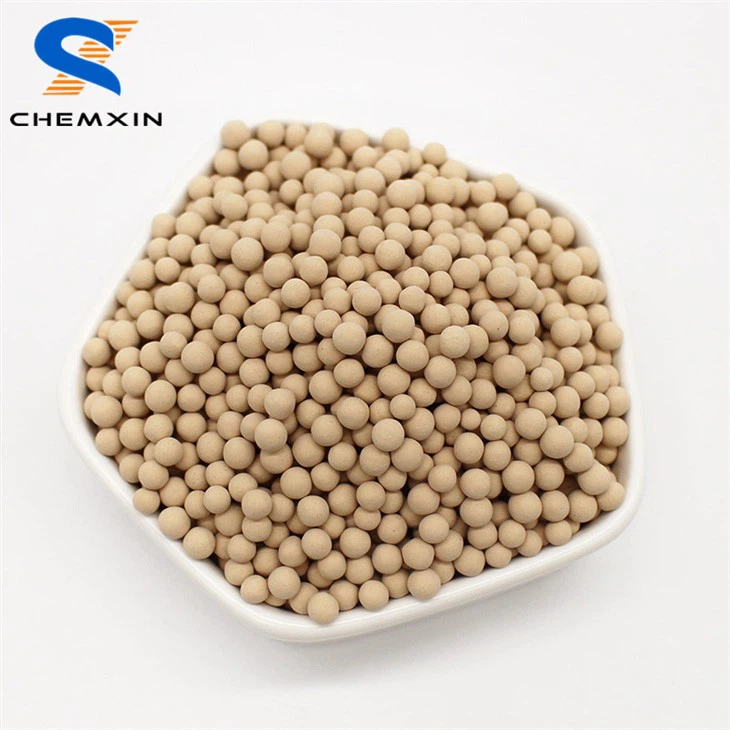
The basic principle behind the working of 5A molecular sieve for CO2 removal is in the selective adsorption of molecules on the basis of polarity and size. The pores have uniform size and shape and are able to selectively let molecules up to a certain size enter and adhere while they simultaneously exclude molecules that are larger. This same principle comes into play in the case of molecular sieve for steam cracking where the CO2 molecules are trapped from the gas mixture due to their comparatively small size.
It is the properties of 5A molecular sieve that make them so ideal for the gas separation process. Their pore size for instance is 5 angstroms and thus, larger molecules of oxygen and nitrogen are able to pass through undeterred while the smaller molecules of CO2 are trapped due to the molecular filter that operates on pore size. The high adsorption capacity also serves to increase efficiency while the selectivity ensures minimal adsorption of other components from the gas stream. Furthermore, since they are regenerative 5A molecular sieves are a cost-effective option. The process of regeneration also is simple as either the application of heat or the reduction of pressure can cause the trapped CO2 molecules to desorb.
Technical Parameter:
| Model | 5A | |
| Nominal pore diameter | 5 angstroms | |
| Shape | Sphere | Pellet |
| Diameter (mm) | 1.7-2.5(8*12 mesh) | 1.6(1/16 inch) |
| Size ratio up to grade (%) | ≥98 | ≥96 |
| Bulk density (g/ml) | ≥0.70 | ≥0.68 |
| Wear ratio (%) | ≤0.20 | ≤0.40 |
| Crushing strength (N) | ≥35/piece | ≥30/piece |
| Static H2O adsorption (%) | ≥21 | ≥21 |
| Static Hexane adsorption (‰) | ≥12 | ≥12 |
| Water content (%) | ≤1.5 | ≤1.5 |


Hot Tags: 5a molecular sieve adsorbent for adsorbing carbon dioxide, manufacturers, brands, low price, in stock, Siliporite NK 10 AP, Sealants and adhesives additive, desiccant 3a zeolite for methanol drying, Carbon molecular Sieve 99 99 N2 concentration, 5a zeolite for pharmaceutical, Pigment and solvent drying additive
Send Inquiry
